
Why Ethical Promotion Matters in Psychic Services
Promoting psychic services is a bit different from promoting the majority of other products. You are not just offering information or convenience; you are entering a space where people can be highly vulnerable. They may be searching for clarity or trying to make sense of emotional situations.
Due to this, the way you present your message matters as much as what you have to offer.
Ethical promotion is not about avoiding marketing. It is all about creating an experience where people can feel respected while being informed and free to choose.
When this is done well, it builds trust. When done poorly, it can create resistance.
Understanding the Line Between Guidance and Persuasion
Emotional Sensitivity in Spiritual Audiences
People searching for psychic readings are usually dealing with:
- Relationship uncertainty
- Life direction questions
- Emotional healing
This means that readers are more sensitive to the tone and intention of every post. Even subtle pressure can feel overwhelming in many cases.
Why Pushy Marketing Backfires
Pushy messaging may create an increase in short-term clicks, but it often damages long-term trust.
Examples of pushy tactics:
- “Act now before it’s too late.”
- “Your future depends on this reading.”
- “Limited spots—don’t miss your chance.”
These approaches can build anxiety instead of clarity.
Over time, users begin to avoid the sites that feel overwhelming.
The Foundation of Ethical Promotion
Transparency and Honest Expectations
Clear communication is one of the strongest trust signals available.
Instead of promising certain outcomes, use ethical promotion that focuses on possibilities.
For example:
- “This reading can offer perspective.”
- “You may gain clarity about your situation.”
This approach is respectful of the reader’s autonomy.
Respecting Free Will and Personal Choice
Ethical messaging is the type that acknowledges that the reader is in control.
Make sure to avoid framing psychic services as the only solution. Instead, present them as a single option among many.
This will create a healthier relationship between the reader and the content.
Avoiding Fear-Based Messaging
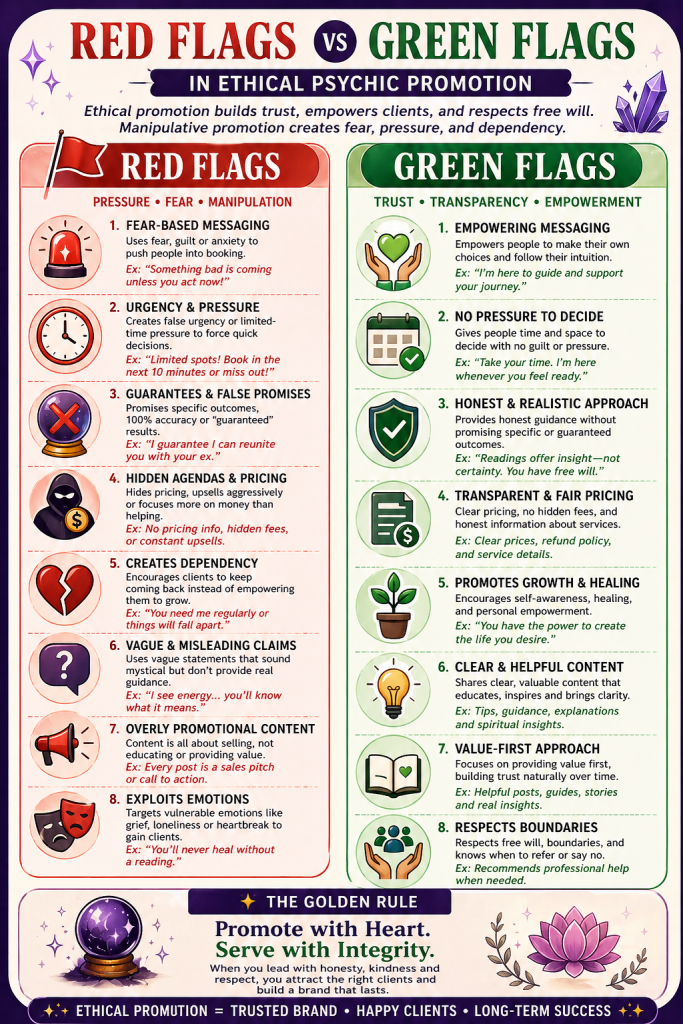
Fear-based marketing is common but can be especially harmful in spiritual niches.
It often sounds like:
- “You are blocking your destiny.”
- “Something bad will happen if you ignore this.”
A more ethical approach focuses on empowerment, not fear.
Common Mistakes That Feel “Pushy”
Urgency Tactics That Create Anxiety
Countdown timers alone or paired with repeated calls-to-action, even aggressive pop-ups, can make users feel rushed and anxious.
In spiritual contexts, this can feel extremely uncomfortable.
Overpromising Results
Statements that imply any form of guaranteed outcomes can lower credibility.
Balanced language builds more trust than certainty.
Overuse of Calls-to-Action
When each and every paragraph ends with a sales prompt, the content feels transactional.
Spacing and subtlety make a significant difference.
Real Examples: Ethical vs Pushy Messaging
Before and After Content Comparison
Pushy version:
“Talk to a psychic now before your chance disappears. Your answers are waiting.”
Ethical version:
“If you feel ready, speaking with a psychic may offer insight into your current situation.”
The second version takes away pressure and allows the viewer to make a choice.
Tone Adjustments That Build Trust
Small changes in wording can shift the entire experience:
- Replace “must” with “may.”
- Replace “guarantee” with “possibility.”
- Replace urgency with openness
These adjustments make content feel supportive instead of persuasive or pressuring.
Platforms That Enable Ethical Promotion
Why Structure and Screening Matter
The platform you recommend further affects how ethical your promotion comes across.
Sites that maintain quality control typically create a better user experience.
Example: PsychicOz vs Open Platforms
PsychicOz operates with a curated advisor model, meaning psychics are screened before being listed. This creates a more consistent experience for users.
In contrast, open marketplaces may offer a wider range of advisors but can vary in quality and presentation.
This difference matters when you are recommending services, as consistency helps build trust.
Content Strategies That Feel Natural
Story-Based Content
Stories can be one of the most effective ways to promote without adding pressure.
Instead of telling people what to do, you can show them an experience.
Example:
- A personal story about gaining clarity from a reading
- A client scenario with a balanced outcome
Stories allow readers to relate without feeling pushed.
Educational Content
Teaching is what can build authority without selling.
Examples include:
- Explaining how tarot works
- Breaking down types of psychic abilities
- Clarifying what to expect in a session
This approach generates value before any recommendation is made.
Soft Recommendation Framework
A simple structure for ethical promotion:
- Provide insight
- Explain options
- Offer a suggestion
- Let the reader decide
This keeps the focus on the reader’s experience.
Ethical Affiliate Marketing in the Psychic Niche
How to integrate Links Without Pressure
Affiliate links should feel like they are part of the content, not interruptions.
Instead of placing them aggressively, integrate them naturally within a helpful context.
For example, many creators include programs such as PsychicOz Affiliate (https://affiliates.psychicoz.com) as part of broader guidance rather than as standalone promotions.
Value-First Monetization
When readers are able to gain value from your content, they are more likely to place trust in your recommendations.
The goal is not to push conversations, but to create alignment between content and reader needs.
Psychological Insight: Why Soft Promotion Converts Better
Soft promotion works because it lowers resistance.
When people feel pressured, they become skeptical. When they feel respected, they open up.
This aligns with broader principles of persuasion, where autonomy increases engagement.
For more context on ethical persuasion and user trust, resources like the American Psychological Association provide useful insights:
https://www.apa.org
Building Long-Term Trust Instead of Short-Term Sales
Trust is the most valuable asset within the psychic niche.
It grows when:
- Content is honest
- Recommendations are balanced
- Readers feel respected
It fades when:
- Messaging feels manipulative
- Claims feel unrealistic
- Experiences feel transactional
Focusing on long-term trust helps build more sustainable growth.
Wrapping Up
Ethical promotion is not about limiting your ability to market specific psychic services. It is all about improving how you connect with your audience.
When your content is grounded and thoughtful, as it remains respectful, promotion becomes a natural extension of value, not some separate effort.
Over time, the most effective strategy is simple: help first, suggest next, and then let people choose for themselves.
Frequently Asked Questions
1. What is ethical promotion of psychic services?
Ethical promotion means presenting psychic services honestly, clearly, and respectfully without using fear, pressure, false promises, or emotional manipulation to push someone into a reading.
2. Why is ethical marketing important for psychic affiliates?
It builds long-term trust. People seeking psychic guidance may feel emotionally sensitive, so ethical promotion helps them make informed choices instead of rushed decisions.
3. What are examples of pressure-based psychic marketing?
Examples include limited-time fear tactics, claims that something bad will happen without a reading, exaggerated guarantees, hidden fees, or messaging that makes clients feel dependent.
4. Can psychic services be promoted without sounding pushy?
Yes. Focus on education, emotional clarity, personal choice, transparent pricing, service details, and gentle calls to action instead of aggressive sales language.
5. What words should psychic affiliates avoid?
Avoid absolute claims like “guaranteed,” “100% accurate,” “your ex will return,” “act now,” or “bad luck will follow you” because they can feel manipulative or misleading.
6. What type of language is more ethical?
Use supportive phrases such as “may help you gain clarity,” “can offer perspective,” “explore your options,” and “make the choice that feels right for you.”
7. Is urgency always unethical in psychic promotion?
No, but urgency becomes unethical when it pressures people emotionally. A real limited offer can be mentioned, but it should not create fear, guilt, or panic.
8. Should psychic affiliates include disclaimers?
Yes. Clear disclaimers help set honest expectations and remind readers that psychic readings are for guidance, reflection, and entertainment, not guaranteed outcomes.
9. How can affiliates promote psychic readings responsibly?
They can explain how readings work, compare services fairly, share real benefits, disclose affiliate relationships, avoid guarantees, and encourage readers to use their own judgment.
10. What is a red flag in psychic advertising?
A red flag is any message that uses fear, shame, dependency, secrecy, false certainty, or hidden pricing to influence someone’s decision.
11. What is a green flag in psychic advertising?
A green flag is honest, transparent, helpful messaging that respects the reader’s free will and encourages them to make a calm, informed choice.
12. Can emotional storytelling be ethical?
Yes. Storytelling is ethical when it creates connection and understanding without exaggerating pain, promising specific outcomes, or exploiting vulnerability.
13. Should affiliates mention pricing clearly?
Yes. Clear pricing, refund terms, introductory offers, and service details help readers feel informed and reduce confusion before they choose a psychic service.
14. Is it okay to promote psychic services to people going through heartbreak?
Yes, but the messaging should be sensitive. It should offer support and perspective without promising reconciliation, encouraging obsession, or creating emotional dependency.
15. How can affiliate content build trust?
Trust grows through honest reviews, balanced comparisons, clear disclosures, helpful explanations, real examples, author transparency, and respectful calls to action.
16. Should psychic affiliates disclose commissions?
Yes. Affiliate disclosures are important because readers deserve to know when a website may earn a commission from a recommendation.
17. Can ethical promotion still convert well?
Yes. Ethical promotion often converts better over time because readers feel respected, informed, and safe instead of pressured or manipulated.
18. What should a good psychic call to action sound like?
A good call to action should feel like an invitation. For example: “Explore available advisors when you feel ready” or “Choose a reader who matches your needs.”
19. What should psychic marketers avoid when writing ads?
They should avoid fear-based hooks, fake scarcity, guaranteed results, medical or legal promises, crisis exploitation, and claims that make clients feel powerless.
20. What is the best rule for ethical psychic promotion?
The best rule is simple: help first, sell second. If the content informs, respects, and empowers the reader, the promotion is more likely to feel ethical and trustworthy.