Psychic influencers in 2025 have emerged as one of the most profitable and captivating forces on social media. They are no longer hiding in candlelit corners or working exclusively through private readings. Instead, they are livestreaming on TikTok, teaching astrology on YouTube, launching manifestation apps, and even selling aura art on Etsy. These creators have successfully blended ancient spiritual wisdom with modern marketing finesse, transforming intuition into influence and turning faith into a full-time income stream.
The psychic economy is about thriving, not simply surviving. Analysts estimate that online psychic services now represent a multibillion-dollar digital ecosystem, bolstered through affiliate programs and virtual readings. There are even AI-enhanced divination tools. Beyond the numbers, a cultural shift is evident. People are increasingly seeking meaning, emotional guidance, and spiritual connection in a world that is becoming increasingly unpredictable.
Influencers have stepped in to fill the void. They are not some detached mystics, but as relatable guides. They openly share their vulnerabilities, their daily rituals, and their cosmic insights with pure candor. This new generation of spiritual entrepreneurs is not limited to reading cards or the stars. They are reading audiences. The following five niches reveal just how modern psychics are redefining entire belief systems. They are further monetizing them with authenticity, care, and creativity.
#1: Astro-Entrepreneurs Who Turn Zodiac Insights into Digital Empires
Astrology has undergone a significant transformation, one of the most dramatic in digital history. Once confined to the back page of the newspapers, it now fuels entire influencer empires. From zodiac memes that go viral to detailed chart breakdowns on TikTok, astrology is entertainment but also an emotional education.
Kings, queens, and emperors once sought guidance from celestial advisors on policy and warfare, according to an article in Smithsonian Magazine that examines the historical prestige of astrology. In 2025, contemporary “astropreneurs” are navigating similar turbulence with audiences around the world, but this time, they employ reels rather than scrolls.
By providing personality-driven content, such as “Why Capricorns Never Text First” or “Aries in Love During Eclipse Season,” astrological influencers foster trust. These easily assimilated, humorous insights convert complex information into everyday, relatable language. Creators such as Jessica Lanyadoo, Aliza Kelly, and the brand team at Co–Star show how astrology can drive workshops, book deals, and apps.
Chart readings, online astrology courses, Patreon memberships, and merchandise bearing the zodiac are some ways to make money. Some influencers even collaborate with fashion brands to create capsule collections that incorporate elements of birthstones.
Astrology’s mass appeal further lies in its political undertones. In an era defined by polarization, astrology provides a non-divisive identity map. A “Gemini Moon” is not a political stance. It is a personality archetype that transcends borders. For audiences who feel disconnected from traditional belief systems, astrology offers a sense of belonging with a touch of cosmic flair.
#2: Energy Healers and Aura Coaches to Monetize the Invisible
In 2025, “energy doesn’t lie” has emerged as a catchphrase for digital healers. What was once considered fringe is now a full-fledged wellness trend. Aura reading, vibrational coaching, and energy healing are some of the psychic specialties with the fastest rates of growth on the internet.
Audiences seek inner control over outward success after years of shared anxiety and exhaustion. By transforming intangible energy work into concrete visual experiences, energy influencers such as aura photographers, chakra coaches, and reiki masters capitalize on this change.
The influencer “Color Frequency,” who utilizes AI filters to mimic aura photography, is a prime example. Her YouTube channel bridges the gap between science and mysticism by fusing neuroscience-based conversations about emotion and frequency with intuitive readings. She makes over six figures a year selling digital aura portraits for $77 each.
According to research published by Harvard Health, belief systems and rituals may use the placebo effect to induce favorable physiological reactions even in the absence of scientific proof. Energy content makes people feel better, calmer, and more in control, which explains why it resonates so strongly.
Storytelling is what sets successful aura influencers apart from copycats. “Your energy is blocked” is not all they say. “Your light is trying to reach the surface again,” they say. They help audiences move away from dependency and toward empowerment, which is essential for long-term spiritual entrepreneurship.
#3: Tarot Readers as Storytellers Moving from Fortune to Franchise
Once thought of as an occult art, tarot has developed into one of the most imaginative storytelling platforms on the internet. Tarot readers have transformed into digital poets on YouTube and TikTok, utilizing archetypal imagery to help followers navigate feelings, love stories, and career conundrums.
Tarot’s popularity soared because it provides introspection rather than forecasts, according to The Week’s article on its cultural comeback. Metaphor is what gives tarot its power. The Fool, the Star, and the Tower are all cards that depict psychological realities with which viewers are immediately familiar.
Today’s tarot makers make money in a variety of ways. Some sell personalized readings on Patreon or Etsy, while others provide free general readings online. Others release digital reading apps or work with artists to create unique tarot decks. After releasing a deck featuring artificial intelligence-generated celestial art, influencer “Moonlight Oracle” rose to prominence as one of 2025’s most prosperous tarotpreneurs. In six months, 15,000 copies of her deck were sold.
Instead of framing their readings as predictions for the future, tarot influencers frequently present them as “energy updates.” In a time when people are skeptical, this subtle rephrasing increases credibility. Instead of being fortune tellers who foretell the future, audiences view tarot readers as perceptive storytellers who guide them through life’s unexpected turns. The outcome? Long-term patronage, increased engagement, and deeper trust.
#4: Manifestation and Mindset Coaches Focusing on the Psychology of Prosperity
Manifestation coaches have created a business model from belief. These influencers teach audiences how to attract abundance by aligning their emotions, thoughts, and actions. This approach creates a highly lucrative psychic-adjacent niche that blends cognitive psychology, neuroscience, and ancient spiritual law.
Psychology Today notes that visualization, reframing, and a bit of optimism can tangibly influence mood, motivation, and success. Influencers have learned to capitalize on this by mixing therapeutic language with spiritual flair. One way this comes across is as, “Your frequency is your flair.”
Two well-known examples that combine entrepreneurship and empowerment are Roxie Nafousi’s “Manifest” brand and Gala Darling’s radical self-love empire. They offer online classes, retreats, and product lines that include meditation apps and affirmation journals.
Because it combines aspiration and spirituality, manifestation content is successful. In contrast to previous self-help movements, it sanctifies ambition rather than denigrates it. “You can want wealth and wisdom at the same time,” is the message. Gen Z and millennial audiences seeking success without compromising their morals will find this blend appealing.
Authenticity is still crucial, though. False positivity is immediately apparent to followers. The most successful manifestation influencers are open and honest about failure, redefining it as a necessary step toward alignment. Their message remains constant: mastering one’s mindset is a matter of maintenance, not magic.
#5: Mediums and Tech Psychics Who are Channeling the Digital Beyond
One of the most surprising psychic trends in 2025 is the rise of tech-enhanced mediumship. Spiritualists once used candlelight and crystal balls, but now they often employ software and AI-generated art. “Tech psychics” blend digital storytelling with ancestral reverence. They create immersive experiences that simulate communication with the beyond.
National Geographic explored how ancient civilizations utilized tools, from astrology to divination bones, to interpret the unseen. Today’s mediums are utilizing new technology to continue the legacy.
On platforms like TikTok, “AI Mediums” use text generators to simulate conversations with spirit guides, while AR developers build “ancestral presence filters” for ritual videos. YouTubers use motion graphics to visualize energy while livestreaming séances in virtual rooms. There is no denying its emotional appeal as it blends hope, loss, and nostalgia.
Supporters view this as the development of human spirituality, while detractors doubt authenticity. Modern psychics use apps and algorithms, much like Victorians used typewriters and telegrams for séances. The desire to communicate remains, but the unseen remains ancient.
When conducting tech-assisted sessions, one ethical medium called “Digital Clair” places a strong emphasis on compassion and consent. She makes money by offering consultations to help people find closure, creating memorial art using AI, and holding virtual workshops. Her accomplishments demonstrate a profound reality: when integrity is upheld, spiritual technology flourishes.
Why Belief Pays
Behind every trend, even the mystical ones, lies a sharp business mind. Psychic influencers are part of a new wave of “spiritual capitalists” who understand that intuition and entrepreneurship can coexist. The psychic economy is structured just like the influencer economy. There are multiple and diversified income streams, including private sessions, digital products, affiliate programs, and partnerships with conscious brands.
Platforms like PsychicOz provide a professional infrastructure, allowing readers and healers to monetize their talents safely and sustainably. Some affiliates earn hundreds of dollars per client referral, transforming part-time spirituality into a full-time income.
Faith becomes marketable because it is valuable, not because it is fake. People pay for comfort, emotional clarity, and a sense of order amidst chaos. Psychics charge for their intuitive advice, just as therapy apps charge for mental health support. The underlying tenet of both sectors is that connections have the power to heal.
This is evolution, not exploitation. Contemporary psychics are increasing access rather than taking advantage of belief. By 2025, a clairvoyant in Lagos or Buenos Aires could easily establish a global following, verify their legitimacy, and make a respectable living without sacrificing their authenticity. The global psychic economy is a symbol of democratization and empowerment.
How to Choose Your Psychic Niche
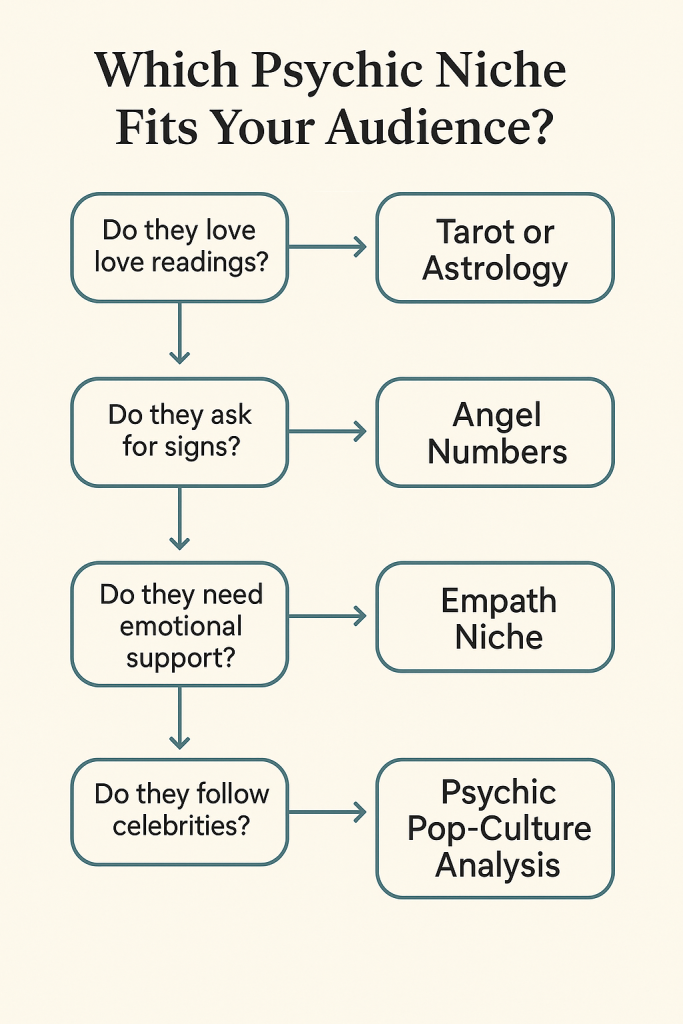
For new or aspiring creators who are entering the spiritual economy, the key to success is alignment. Your niche should definitely match your spiritual gifts, as well as your communication strengths. Ask yourself whether you are a visual, emotional, analytical, or expressive person. Each psychic niche will resonate a bit differently.
- Astrology – Perfect for analytical thinkers who love symbolism and data.
- Tarot – Ideal for storytellers and artists who thrive on metaphor.
- Energy Work – Best for empaths who connect through sensation and healing.
- Manifestation Coaching – Great for motivators who blend spirituality with leadership.
- Mediumship – Suited for sensitive communicators drawn to ancestral or emotional work.
Authenticity and talent drive success. Audiences can sense when a creator’s message is rehearsed instead of being real. Share your spiritual journey, including your struggles, doubts, and the breakthroughs you’ve experienced. Vulnerability is what builds connection.
Once you have chosen your niche, consistency matters. Develop a visual identity and set clear ethical boundaries. You need to treat your brand as a sacred practice. The most successful psychic influencers effectively combine empathy with strategic planning. They serve first and sell later, teaching before they promote, and leading with integrity at all times.
The Future of Psychic Influence
As the digital landscape evolves, so will psychic entrepreneurship. Expect hybrid practices: astrologers collaborating with therapists, tarot readers using AI analytics to design personalized affirmations, and aura photographers turning quantum imagery into NFT art. Technology and spirituality will continue to converge, not as rivals, but as amplifiers.
Increased regulation, ethical certification, and even official recognition of psychic services in digital commerce are likely to occur over the next decade. Audiences will become more discriminating in the meantime, appreciating psychics who combine faith and empathy, as well as intuition and education.
The most important lesson? The influencer era did not replace spirituality; rather, it was revitalized. Psychic creators have restored access to the mystical by making belief profitable. Whether through humor, healing, or high-tech holograms, they remind the world that even in an algorithmic age, intuition is still the most potent currency of all.
FAQ
1. What does “psychic niche” mean for influencers?
A psychic niche is a specific corner of the spiritual world you focus your content on, such as tarot, astrology, angel numbers, or energy healing. Instead of trying to cover every spiritual topic, you build trust by showing consistent expertise in one lane. This makes it easier for followers to know what to expect from you and why they should listen to your recommendations.
2. Which psychic niches are especially profitable for influencers in 2025?
The article highlights five high-demand niches: visual tarot and oracle content, astrology and birth chart storytelling, angel numbers and manifestation, empath and energy-clearing guidance, and celebrity or pop-culture psychic commentary. These niches perform well because they blend personal growth with entertainment value and are easy to package into short-form, shareable posts.
3. Do I need to be a professional psychic to create content in these niches?
No, you do not have to be a full-time professional psychic to start. Many influencers are dedicated enthusiasts who collaborate with vetted psychic platforms or readers for deeper insights. What matters most is being honest about your level of experience, crediting sources, and pointing followers to professional readings when a question goes beyond your scope.
4. How can influencers ethically promote psychic readings as affiliates?
Ethical promotion begins with transparency: clearly disclose that you use affiliate links and that you may earn a commission. Focus your content on education, entertainment, and emotional support rather than fear-based messaging or guaranteed outcome claims. When recommending PsychicOz or another platform, emphasize free will, personal responsibility, and the value of getting a reading for guidance rather than absolute predictions.
5. Which social platforms work best for psychic niches in 2025?
Short-form video platforms like TikTok, Instagram Reels, and YouTube Shorts are ideal for quick tarot pulls, angel number breakdowns, or mini astrology forecasts. Pinterest and blogs support more evergreen content such as in-depth guides, spreads, or rituals that keep sending traffic to your affiliate links. Many successful influencers repurpose the same idea across all of these channels with slightly different formats.
6. How much can influencers realistically earn from psychic affiliate programs?
Earnings vary widely and depend on your audience size, trust level, and how well your content pre-qualifies people who are ready for a reading. Some creators start with a few commissions a month, while others with highly engaged niche audiences can generate hundreds or thousands of dollars in recurring income. The key is consistency: posting regularly, testing offers, and tracking which topics lead to the most reading bookings.
7. How do I choose the right psychic niche for my audience?
Start by looking at what your followers already respond to—polls, comments, and saves are strong clues. Then choose a niche that overlaps your genuine interests with their biggest questions, such as love, career, or healing from past relationships. When your niche matches your natural curiosity, it is much easier to create content long term without burning out.
8. Can I combine more than one psychic niche on the same channel?
Yes, you can blend niches as long as your overall message feels coherent. For example, you might pair astrology forecasts with tarot pulls, or mix empath wellness tips with angel number content. The article suggests organizing your content into recurring series or playlists so followers can easily find the topics they care about most.
9. What types of content tend to convert best into paid psychic readings?
Content that speaks directly to a specific problem usually converts best—such as “Is he coming back?” tarot spreads, Saturn return survival guides, or empath burnout checklists. When someone feels seen in a short video or post, they are more likely to click through to a full reading for deeper clarity. Including a simple call to action, like “If this resonates, book a live reading for a detailed look at your situation,” helps move them from curiosity to action.
10. How does the PsychicOz affiliate program fit into these niches?
The PsychicOz affiliate program allows influencers in any of these niches to earn commissions by referring new clients to vetted, professional readers. You can link to PsychicOz in your bio, blog posts, link pages, and video descriptions wherever you talk about timing, love, money, or spiritual growth. Because the platform covers many specialties—tarot, astrology, mediumship, love readings—it is easy to connect each niche topic to a relevant type of session.